This is the time to divide and transplant hostas, daylilies and other perennials.
Plant winter-hardy bulbs before the ground freezes in late November. This is also the time to fertilize bulbs.
After the first hard frost, cut back perennials and promptly remove leaves, weeds and other landscape debris from planting areas to avoid giving plant disease a place to start.
Lightly rake over mulch in landscape beds to allow water to better penetrate, and top dress your perennial beds with mulched leaves.
It's important that trees and shrubs get adequate moisture in fall to get a good start next spring. Monitor soil moisture levels through December, and keep watering trees and shrubs as needed.
Saturday, October 16, 2010

Thursday, July 8, 2010
lawn vacation tips
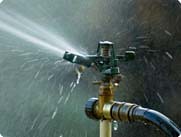 If You'll Be Gone for 1 Week or Less...
When you're going away for a week in the summer, your lawn won't even miss you. Lawns grow more slowly in the heat of summer, so simple preparations will do just fine. Just mow your lawn at the regular height the day before you go. If you water your lawn, be sure to water it deeply the day before you leave.
 If You'll Be Away for 2 Weeks or More ...
Before you go, set your mower down a notch and mow it the day before you leave. When you get back, raise your mower 2 notches before you cut your lawn. Try not to take off more than on third of the grass height at a time. Also, water your lawn deeply the day before you leave if watering is not restricted. Your lawn may go dormant in hot, dry weather while you're away. Not to worry. Going dormant is a healthy coping mechanism for grass. You can water it deeply when you get back. If you'll be gone for more than 2 weeks, you may want to hire the neighborhood kid or a mowing service to cut your grass while you're away.
Thursday, June 10, 2010
grub time
It's that time of year again. Get that Scott's Turf Builder with SummerGuard out and then a week later some GrubEx.
Saturday, June 5, 2010
pond news
We finally have the fountain and lights working.
We have no fishing signs posted because we'd like not to have a lot of people outside of the neighborhood coming in. On the other hand, our pond can be a real nice family place. Please use it safely and respect our property.
Do not litter and do not throw your fishing lines across the fountain power line (this runs between the fountain and the gazebo). Sometimes when repairs are done we are finding hooks in the wiring. One time there was a fishing rod with line tangled around the fountain itself. Please stay off to the sides and if you are dragging, do so on the east side of the pond.


We have no fishing signs posted because we'd like not to have a lot of people outside of the neighborhood coming in. On the other hand, our pond can be a real nice family place. Please use it safely and respect our property.
Do not litter and do not throw your fishing lines across the fountain power line (this runs between the fountain and the gazebo). Sometimes when repairs are done we are finding hooks in the wiring. One time there was a fishing rod with line tangled around the fountain itself. Please stay off to the sides and if you are dragging, do so on the east side of the pond.


Exterior Painting Should Be Done Every 5-10 Years
From WCPO some information you may want to know before you paint the exterior of your home.
Paint the exterior of your house
Paint the exterior of your house
Thursday, May 13, 2010
what about clippings?
From our friends at Scotts.
It's a question we all face when mowing: Should I bag my clippings or leave them on the lawn? In most cases, the answer is easy: Leave the clippings on the lawn! Leaving the clippings will save you time and energy, and it will return valuable nutrients to the lawn.
Like Free Fertilizer
The most important thing you can do for your lawn is to feed it regularly, and grass clippings contain the same beneficial nitrogen, phosphorus, and potassium nutrients as fertilizer. In fact, clippings can provide as much as one-third of the annual feeding requirement for your lawn.
Less Work for You
In addition to recycling nutrients back into the soil, leaving the clippings will cut down your mowing time and relieve you of the chores of emptying the grasscatcher and hauling bags of clippings out to the curb. It may also be keeping your clippings out of the landfill, depending on how your town handles yard waste.
Some Simple Guidelines
There are a few things you can do to help keep your grass strong and looking good when you leave the clippings. Keep your mower blade sharp and mow regularly at the recommended cutting height for your type of grass. Avoid mowing when the grass is wet. If the grass gets so long that mowing at your normal cutting height will remove more than one-third the length of the grass blades, raise the height on your mower. Mow once at the raised cutting height, then again in a different direction at the normal height. Avoid surge growth by using a slow-release fertilizer such as Scotts® Turf Builder®.
Not a Thatch Problem
Contrary to a popular lawn myth, leaving clippings on the lawn does not cause thatch, which is a layer of partially decomposed grass-plant parts between the soil and live grass. Grass clippings are mostly water, so as long as you mow regularly at the right height, they will break down and disappear rapidly.
The Exception: when Bagging is Okay
There are some circumstances when collecting your grass clippings is warranted. If you see signs of lawn disease, pick up the clippings to avoid spreading the fungus. Grass clippings can also be collected for use in a compost pile or as mulch, unless you recently applied a weed control product to the lawn. Some folks bag their grass clippings for aesthetic reasons or to keep the clippings from being tracked into the house. In most cases, following mowing guidelines will avoid clumps that detract from a lawn's appearance and will keep the clippings small enough to filter down into the lawn.
It's a question we all face when mowing: Should I bag my clippings or leave them on the lawn? In most cases, the answer is easy: Leave the clippings on the lawn! Leaving the clippings will save you time and energy, and it will return valuable nutrients to the lawn.
Like Free Fertilizer
The most important thing you can do for your lawn is to feed it regularly, and grass clippings contain the same beneficial nitrogen, phosphorus, and potassium nutrients as fertilizer. In fact, clippings can provide as much as one-third of the annual feeding requirement for your lawn.
Less Work for You
In addition to recycling nutrients back into the soil, leaving the clippings will cut down your mowing time and relieve you of the chores of emptying the grasscatcher and hauling bags of clippings out to the curb. It may also be keeping your clippings out of the landfill, depending on how your town handles yard waste.
Some Simple Guidelines
There are a few things you can do to help keep your grass strong and looking good when you leave the clippings. Keep your mower blade sharp and mow regularly at the recommended cutting height for your type of grass. Avoid mowing when the grass is wet. If the grass gets so long that mowing at your normal cutting height will remove more than one-third the length of the grass blades, raise the height on your mower. Mow once at the raised cutting height, then again in a different direction at the normal height. Avoid surge growth by using a slow-release fertilizer such as Scotts® Turf Builder®.
Not a Thatch Problem
Contrary to a popular lawn myth, leaving clippings on the lawn does not cause thatch, which is a layer of partially decomposed grass-plant parts between the soil and live grass. Grass clippings are mostly water, so as long as you mow regularly at the right height, they will break down and disappear rapidly.
The Exception: when Bagging is Okay
There are some circumstances when collecting your grass clippings is warranted. If you see signs of lawn disease, pick up the clippings to avoid spreading the fungus. Grass clippings can also be collected for use in a compost pile or as mulch, unless you recently applied a weed control product to the lawn. Some folks bag their grass clippings for aesthetic reasons or to keep the clippings from being tracked into the house. In most cases, following mowing guidelines will avoid clumps that detract from a lawn's appearance and will keep the clippings small enough to filter down into the lawn.
turf builder time
 It's time to for your second application. If you have broad leaf weeds, Scotts® Turf Builder® With PLUS 2® Weed Control is our recommendation.
If you forgot the overall plan, see here for the John Conyer Yard Care Program©.
Subscribe to:
Posts (Atom)